By Arecci Carrillo Contreras
Before social media, romance had a slower and clearer rhythm. Meeting someone implied time, deep conversations and gradual progression. Today, relationships develop in an environment of immediacy and hyperconnection, where the same digital space used for work and entertainment also hosts romantic life. That constant mix keeps us permanently available, expecting fast responses and interpreting any pause as distance. Speed becomes expectation, altering how desire is built. As Luke Thompson explains, “for this longing to exist there has to be a wait, and with apps and phones everything is instant” (Thompson, 2026, para. 4). In my twenties I have seen how connections form quickly and conflicts intensify just as fast, generating anxiety and distrust. Rodríguez Salazar and Rodríguez Morales (2016) note that communicative technologies affect courtship, flirting and the search for recognition, showing that social media reshapes not only the rhythm of relationships but also how we understand being in one. In this essay I argue that social media have transformed contemporary romance by accelerating relationships, intensifying surveillance and weakening intimacy.
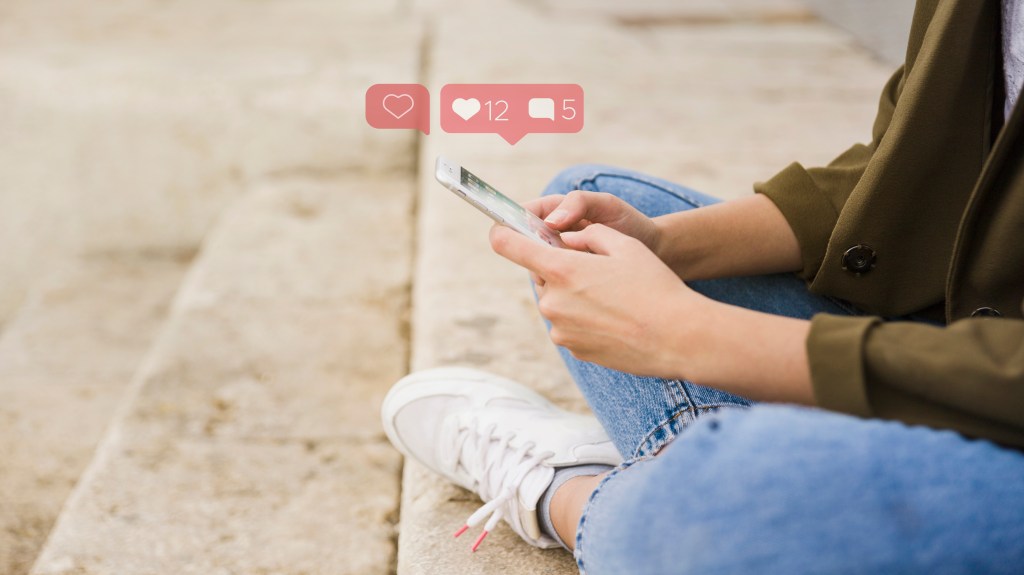
This acceleration also changes how relationships are shown. In digital culture, love becomes an aesthetic: perfect photos, edited moments and narratives that project an idealized version of the couple. On Instagram and TikTok many relationships appear exemplary until sudden breakups reveal how little of what we see is real. This pressure also appears in Vogue, where creators like Sophie Milner mention losing followers for having a boyfriend and describe a cultural discomfort around showing a relationship (Joseph, 2025). This connects with the logic of the soft launch, a way of signaling a partner without fully revealing them. Prodel (2018) shows how Instagram functions as a space of courtship where following, liking and posting act as romantic signals but also as triggers of insecurity. In this context, intimacy becomes content, and often the appearance of love weighs more than the emotional experience.
When relationships become public, they also become surveillable. Digital platforms normalize constant monitoring within romantic life. Nueva Sociedad (2016) points out that technologies expand possibilities of observation and control, generating conflicts even in stable relationships. Prodel (2019) adds that platforms like Instagram facilitate this monitoring, where any action can be interpreted as disinterest or infidelity. Tello (2013) explains that network architectures expose information that once belonged only to the intimate sphere. These dynamics foster a form of connection where doubt emerges easily, each digital gesture becomes a signal to decode, and emotional stability depends on data never meant to measure affection.
Digital immediacy also accelerates how relationships form and end, generating fast expectations and fragile bonds. Practices like ghosting, breadcrumbing or love bombing express dynamics of confusion and emotional exhaustion. A study by MDPI (2020) associates breadcrumbing with lower life satisfaction and higher loneliness. Nueva Sociedad (2016) situates these practices within increasingly brief relationships, where speed and lack of limits deepen instability. These dynamics have become common because platforms facilitate quick disconnection, immediate replacement and a lack of affective responsibility.
Dating applications intensify this rhythm. They operate through immediacy, where swipes, profiles and algorithms organize how people meet. Although they offer convenience and access to new circles, they also promote superficial interactions where appearance becomes the main filter. The aesthetic of the self (the edited version each person presents) shapes how they seek approval. Apps expand opportunities but their design centered on speed and image limits emotional connection, reinforcing the sense of constant replacement.
In the middle of this speed, a nostalgia for slower romance emerges. It is not about idealizing the past but recognizing that desire needs time and presence. Palés (2026) describes yearning as a longing that requires waiting and depth. The difference between authentic love and one shaped for social media lies in that the first is sustained in connection, while the second seeks external validation. Meaningful love does not need to be documented; its value lies in the shared experience.
Contemporary love is crossed by tensions between speed, exposure and intimacy. Despite these changes, love has not disappeared; it simply requires conscious intention to sustain itself amid noise, comparison and fear of vulnerability. Accelerated dynamics and the pressure to turn affective life into content have transformed how we relate, but they have not eliminated the possibility of meaningful relationships. Recovering presence, honest communication and authenticity become a way of protecting the intimate. Loving now implies choosing connection over appearance and allowing the relationship to exist outside social media.
References
Joseph, C. (2025). Is having a boyfriend embarrassing now? Vogue.
https://www.vogue.com/article/is-having-a-boyfriend-embarrassing-now
Navarro, R., Larragaña, E., Yubero, S., & Villora, B. (2020). Psychological Correlates of
Ghosting and Breadcrumbing Experiences: A Preliminary Study among Adults.
International Journal of Environmental Research and Public Health.
https://www.mdpi.com/1660-
4601/17/3/1116?amp=1&utm_source=miragenews&utm_medium=miragenews&utm_c
ampaign=news
Palés, A. (2026). ¿Qué es el “yearning”? El deseo que han puesto de moda “Cumbres
borrascosas”, “Más que rivales” y “Los Bridgerton. Ara en
Castellano. https://es.ara.cat/media/series/no-sexo-deseo-yearning-puesto-moda-series-
cine_1_5646426.html
Prodel, T. (2018). El amor en tiempo de redes [Universidad de San Andres]. https://dspaceapi.live.udesa.edu.ar/server/api/core/bitstreams/418e9d78-8485-41af-b51d-f0d50120dccc/content
Rodríguez Salazar, T., & Rodríguez Morales, Z. (2016). El amor y las nuevas
tecnologías: experiencias de comunicación y conflicto. Comunicación y Sociedad, (25),
15-41. https://www.redalyc.org/pdf/346/34642628002.pdf
Tello, L. (2013). Intimidad y Extimidad en las redes sociales. Las demarcaciones éticas
de Facebook. Comunicar, 21(41), 205–213.
https://www.revistacomunicar.com/pdf/41/205-213.pdf
¿Qué dijo el jurado?
Este ensayo sobresale por su uso metódico y eficaz de evidencia para fundamentar su argumento cautivador sobre la transformación del cortejo/noviazgo en la era de los medios sociales. Comenzando con su oración introductoria, la cual presenta un lenguaje evocador e introspectivo, el texto captura el interés de la audiencia a través de una voz narrativa que es a la vez conversacional y refinada. Mediante el desarrollo de un argumento meticulosamente estructurado que despliega afirmaciones bien sustentadas que se complementan entre sí, nos convence de la precariedad del amor en la era digital.
Por su habilidad de persuadir y captar la atención, su relevancia social y su despliegue de una investigación minuciosa, el jurado otorga el primer lugar al ensayo Love in Social Media de la autoría de Arecci Carrillo Contreras.
Jurado: Dra. Ana-Loreanne Colón, Dra. Naida García Crespo, Profa. Yasmarie Hernández González y Prof. Emmanuelle Soto Ríos
Este texto resultó ganador del primer lugar en la categoría Ensayo del Cuarto Certamen Literario (2026) del Centro de Idiomas y Educación General de la Universidad del Sagrado Corazón.
© imagen: freepik.com





Deja un comentario